The Asymmetric Loop
- Designed the two-role structure: thief on touch, security on voice
- Shaped the museum heist premise and the 1998 framing the whole game hangs on
- Paced both sides so neither player is the boring half of the table
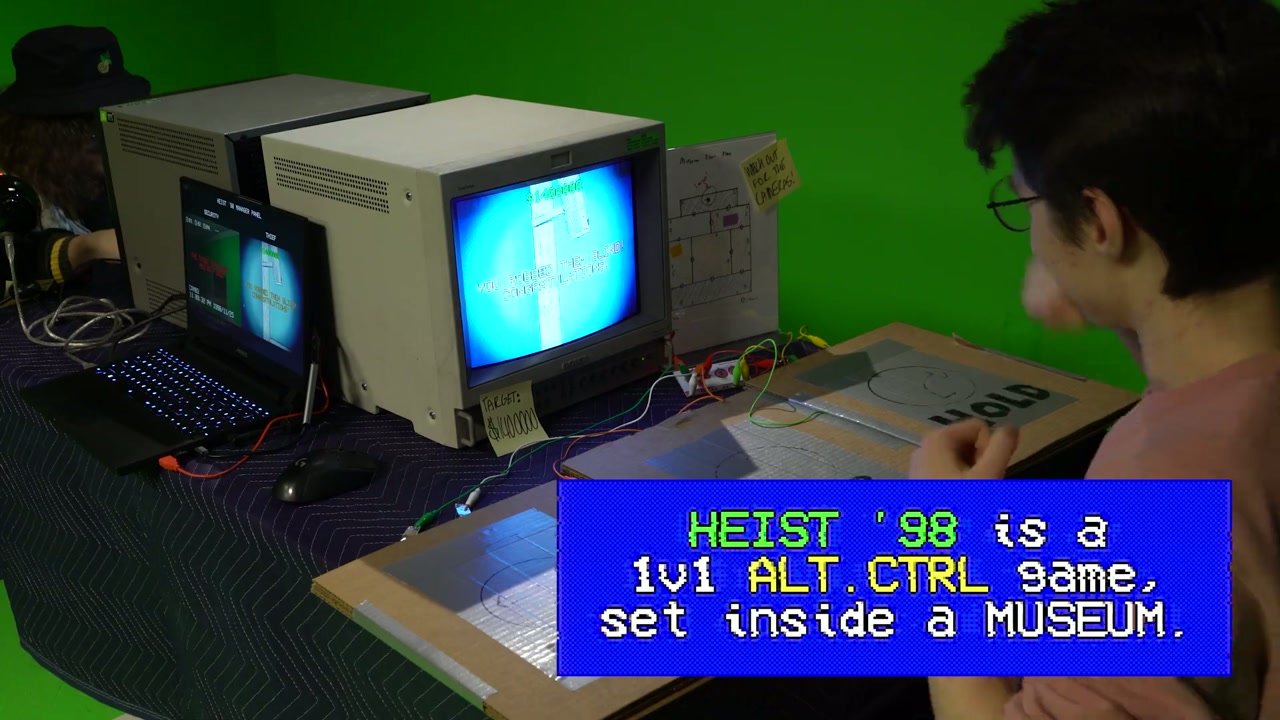
Unity · Team of 6 · One-Week Jam · Nov 2022
A 1v1 museum heist where one player has no keyboard and the other has no eyes. Built in a week, shown at GDC.
Sheridan runs a school-wide jam called Design Week twice a year. November 2022's theme was Alt-CTRL: whatever you built, nobody could play it with a standard input device. We had one week and six people, and we answered it with a two-player museum heist where each player gets a completely different physical interface.
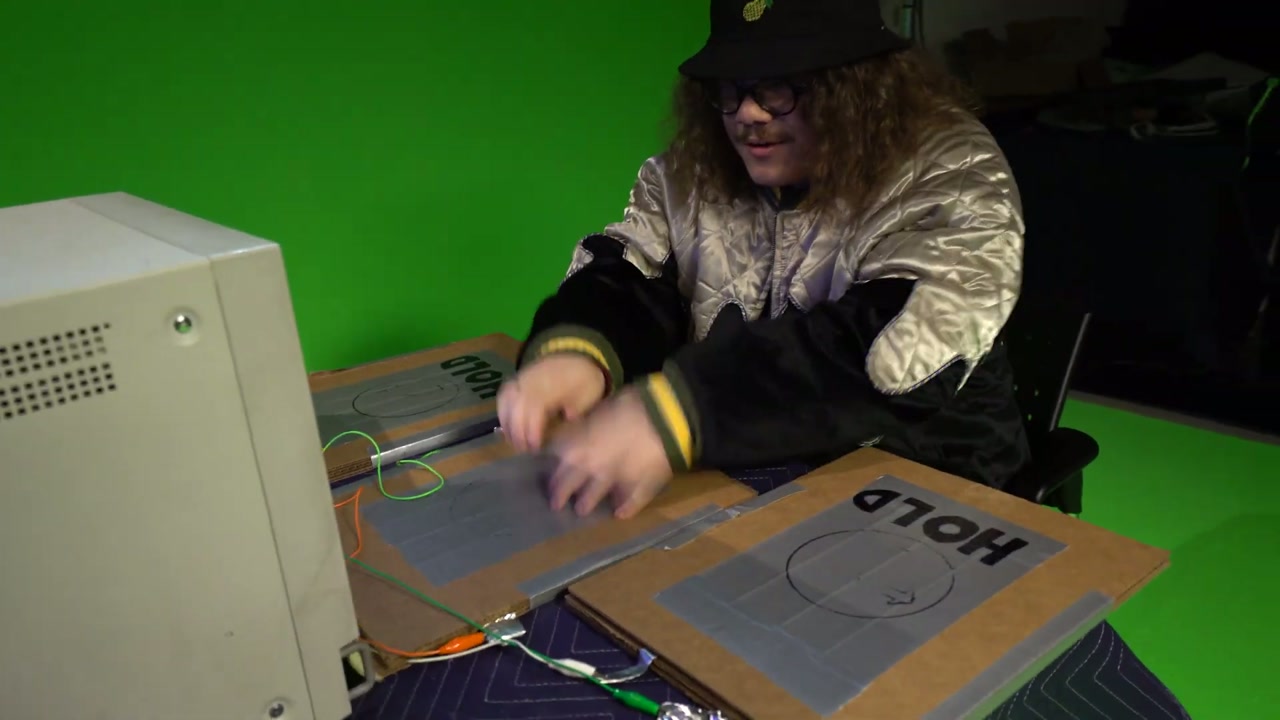
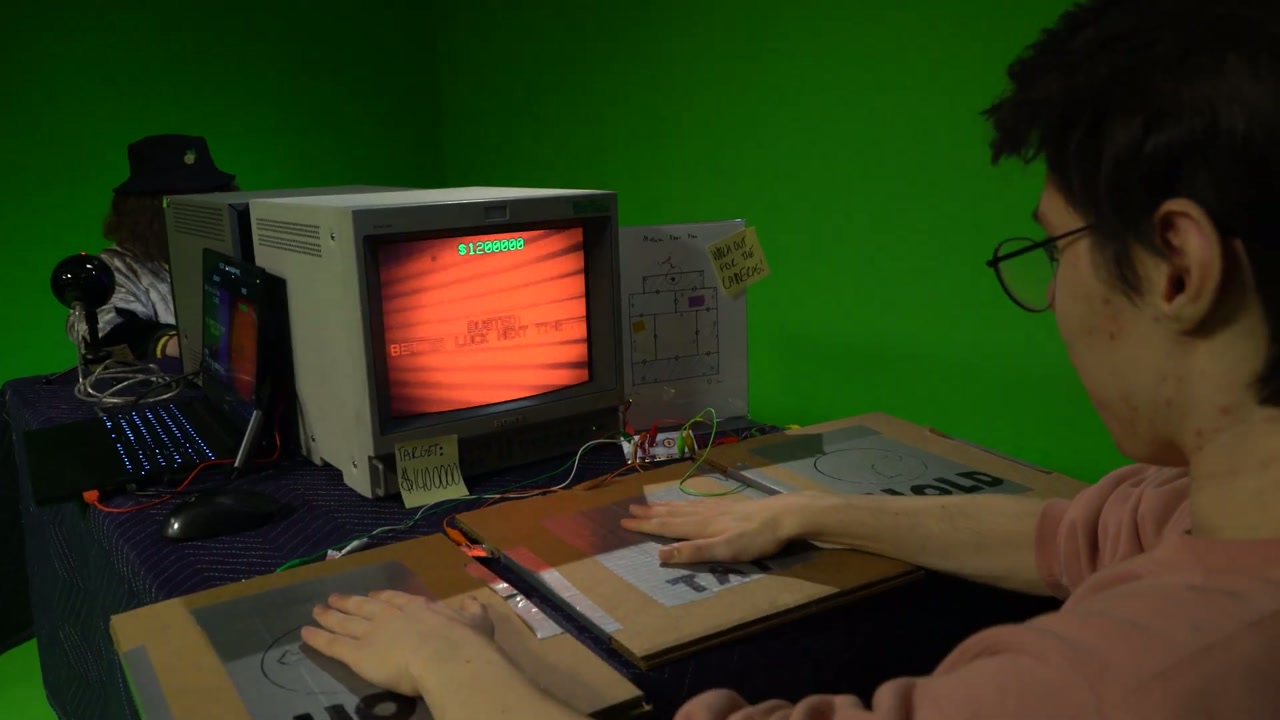
The thief sees the museum in first person and controls it by pressing their palms onto hand-built cardboard pressure pads. The security guard never sees the 3D world at all. They get a CRT security feed, a paper floor plan, a numpad and a microphone, and they lock doors by saying "open" and "close" out loud.
The interesting problem in this jam was not building a controller. It was that an alt-control device makes a player slow and clumsy on purpose, and a heist needs tension. Those two things fight each other, and most of the week went into that fight.
Alt-CTRL meant no keyboard, no mouse, no gamepad and no touchscreen. Whatever you built, the input had to come through something you made yourself. The easy way to answer that is to build a funny controller and put a normal game behind it, and we talked ourselves out of doing that in the first meeting, mostly because you can tell within about thirty seconds of sitting down at a booth when a game is doing it.
What we tried insteadTwo players, two completely different controllers, and the game happens in the gap between what they each know. The thief can see the whole museum but can barely steer. The guard can lock every door in the building but is working off camera feeds and a paper map. Neither of them can do the other one's job and neither of them can see what the other is looking at, so they have to talk.
Cardboard and foil is not a precise input. There's a lag between pressing and the game noticing, the contacts don't fire the same way twice, and you're steering with your palms. We got a couple of days into it before it was obvious that anything needing a quick reaction out of the thief was going to read as broken rather than tense.
So we stopped trying to make the thief responsive and built the game around the fact that they aren't. The thing chasing you isn't a guard who out-aims you, it's a door shutting in front of you while you're halfway through committing to a turn and physically can't stop. Once we leaned into that the controller stopped being a problem we were working around.
The guard was the harder half to design. They have to follow someone moving through ten rooms using nothing but camera feeds, and they have to make door calls fast enough to matter. We could have put a live map on their screen showing exactly where the thief was, and it would have worked, and it would also have removed the entire reason the job is stressful.
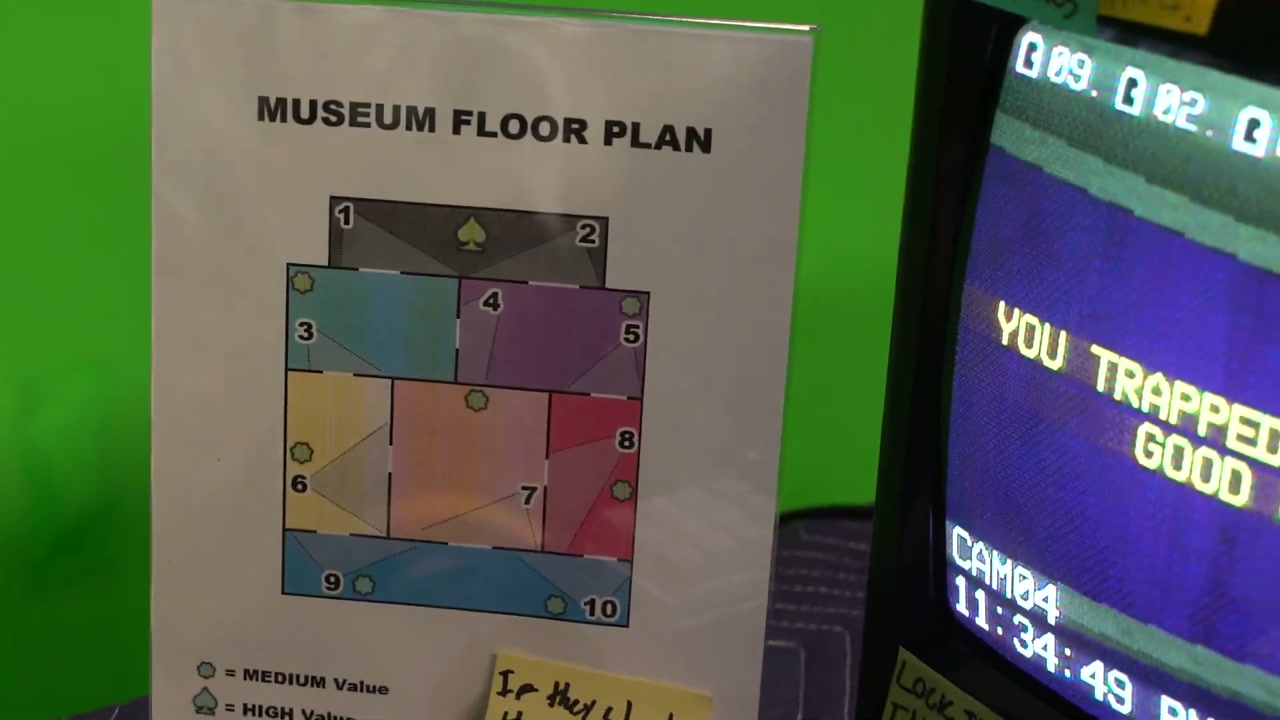
So the map came off the screen. The guard gets a printed floor plan taped to the desk with the rooms numbered 1 to 10 and markers for which rooms have the expensive stuff in them. They watch the feed, look down at the paper to work out which room that is, then say the number out loud.
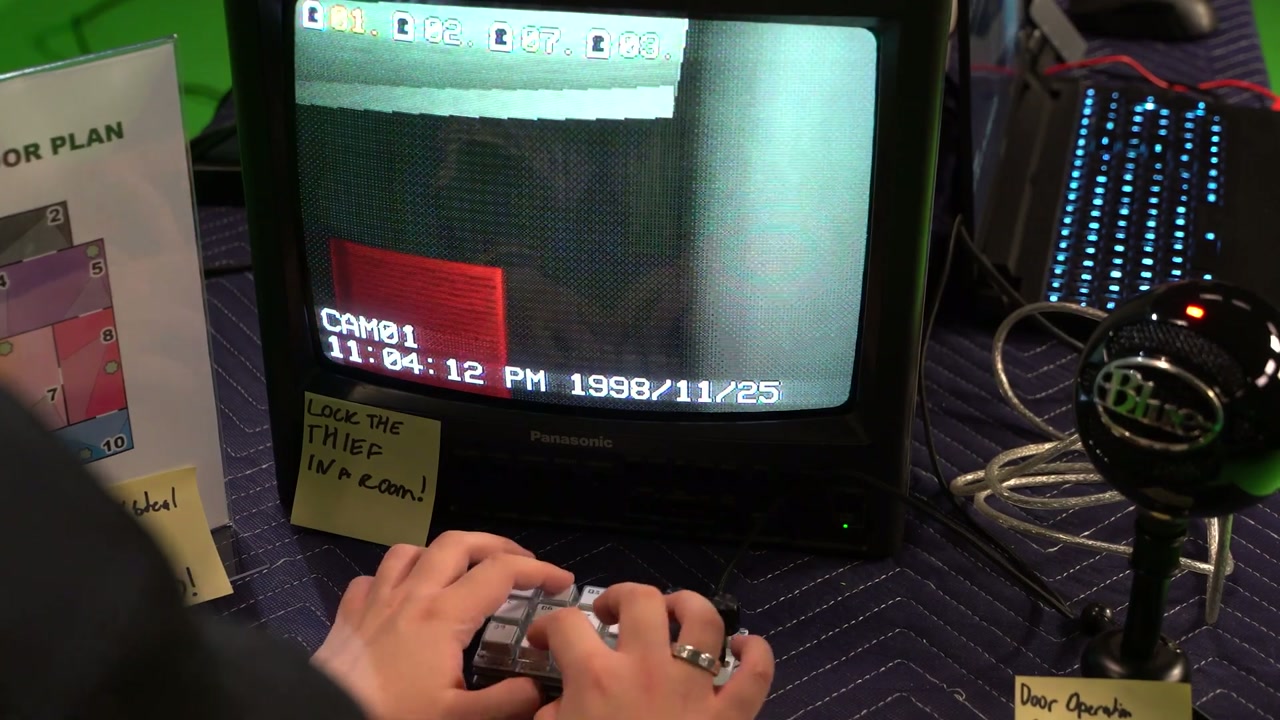
Why voiceSaying "close" out loud is slower than hitting a key, which is fine, but the part we actually wanted is that the thief can hear it. The guard can't do anything without telling the person they're doing it to. Nearly all of the shouting at our booth came out of that one decision.
The awkward part of the week was that neither half could be finished on its own. How the pads were laid out decided what movement was even possible, and how the movement felt decided how the pads should be laid out. We couldn't spec one and hand it to the other person, so both kept changing, and every time the cardboard changed the Unity input mapping had to change with it.
Design Week makes you show your instructors something every single day, which I resented at the time. On a project where the controller is the risky part it's probably the only reason we found out it wasn't playable early enough to do anything about it.
We finished a playable build inside the week, and it got shown at GDC 2023 as an example of the alt-control work coming out of Sheridan's program. We kept the scope tiny the whole time. One museum, one thief, one guard, one rig, and no plans beyond that.
What I took from itLooking back, the controller was the least interesting part. What made it work was giving two people different information and then making them sit at the same table. I've gone back to that shape a few times since, most obviously with the firewalls on Anti-Virus Squad, where the whole point of the repair reward is to stop four players doing the same thing in the same place.
The pads were imprecise and there was no week left to make them precise. Turning that lag into the source of tension worked better than fighting it would have. Constraints are cheaper to design around than to defeat.
A printed floor plan and three sticky notes did work that would otherwise have cost UI we did not have time to build, and they were better for it. Physical props made the guard's job feel like a job.
All of the noise at our table came from two players who could not see what the other saw. Designing the gap between two players is a more reliable source of moments than designing either player's side in isolation.